NATIONAL SCIENCE WEEK: The Devonian Billabong - Orange Cowra Cabonne Science Hub - 2021
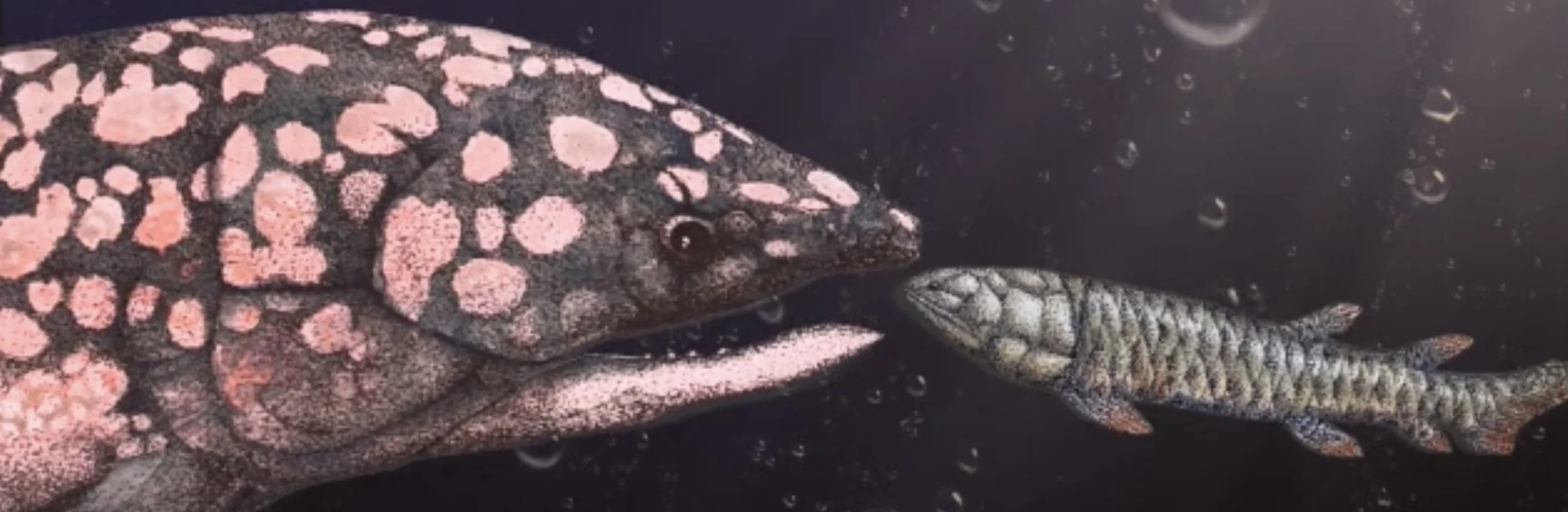
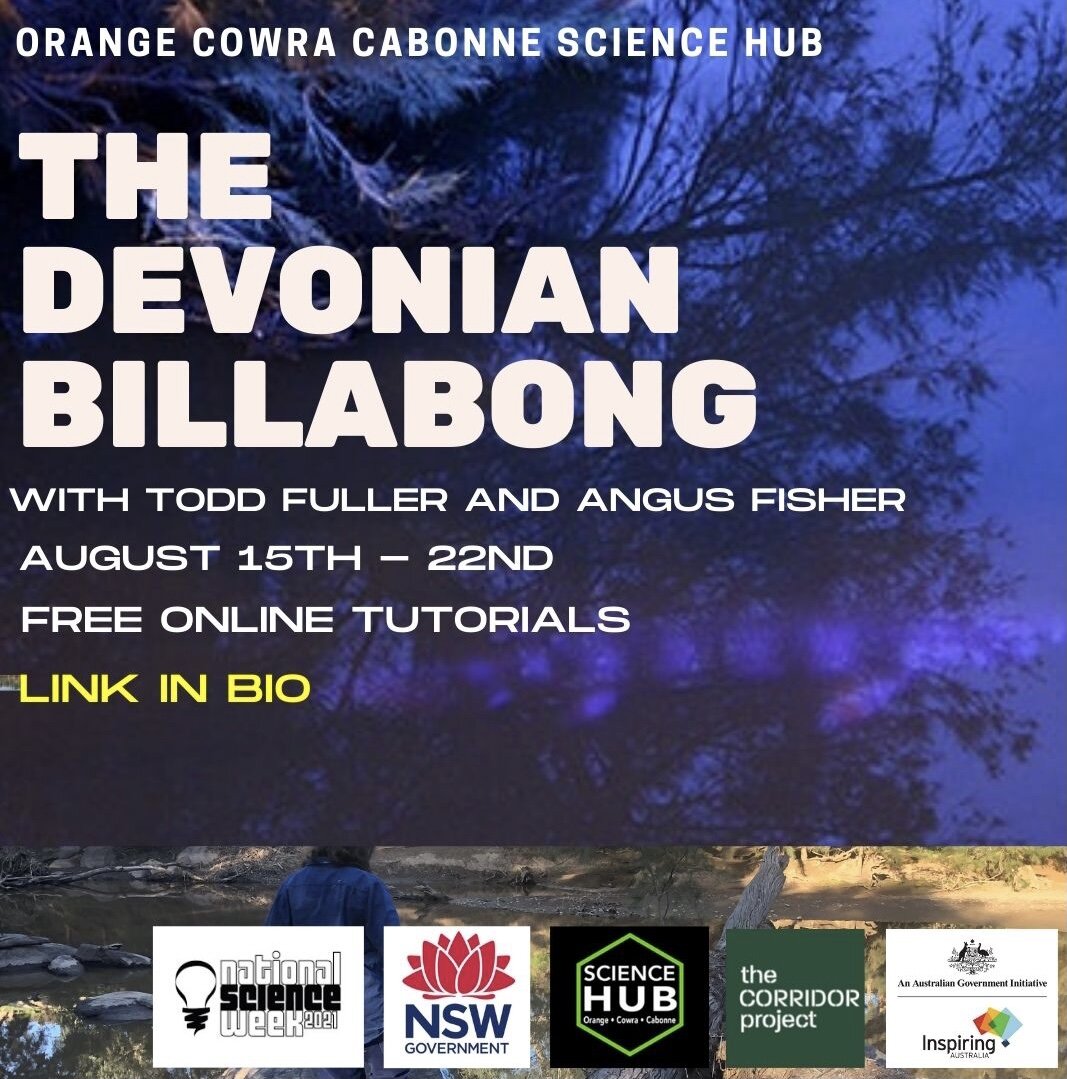
The Orange Cowra Cabonne Science Hub invite communities in the Central West NSW and beyond to imagine a world ruled by fish. Long before dinosaurs roamed the Earth, the mighty rivers of the Central West teamed with bizarre ancient fishes – armoured fishes, fishes with lungs, and some huge predators with jaws like crocodiles. Thousands of their fossils were found at Canowindra and provide a unique glimpse into life during the Devonian Period.
This online event series brought audiences together learning about fish species during the DEVONIAN period. Participants learnt new skills in animation and scientific illustration tutored by celebrated artists Todd Fuller and Angus Fisher. Participants and tutors created individual fish and habitats, culminating in a giant, interspecies billabong. (Launch pending)
“From Cowra and Springwood to Merimbula and Wollongong, community members across New South Wales will have a range of exciting new opportunities to connect with scientists in all kinds of ways, both during National Science Week from 14 -22 August 2021 and throughout the year. Inspiring Australia NSW’s annual science engagement funding round will support the delivery of dozens of community events, continuing a strategic approach to extending networks in order to increase public awareness of the critical role science and technology plays in our lives”
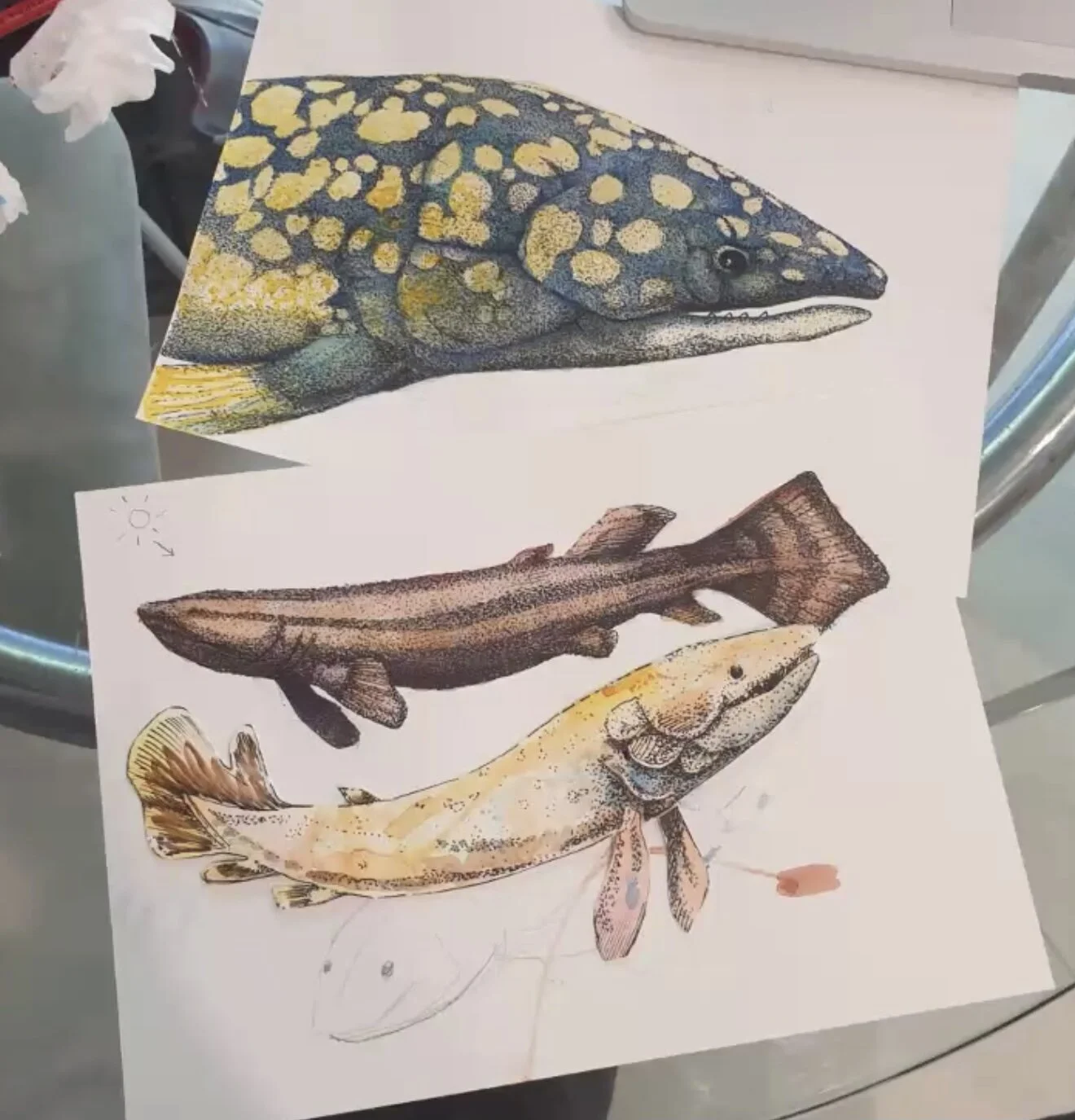
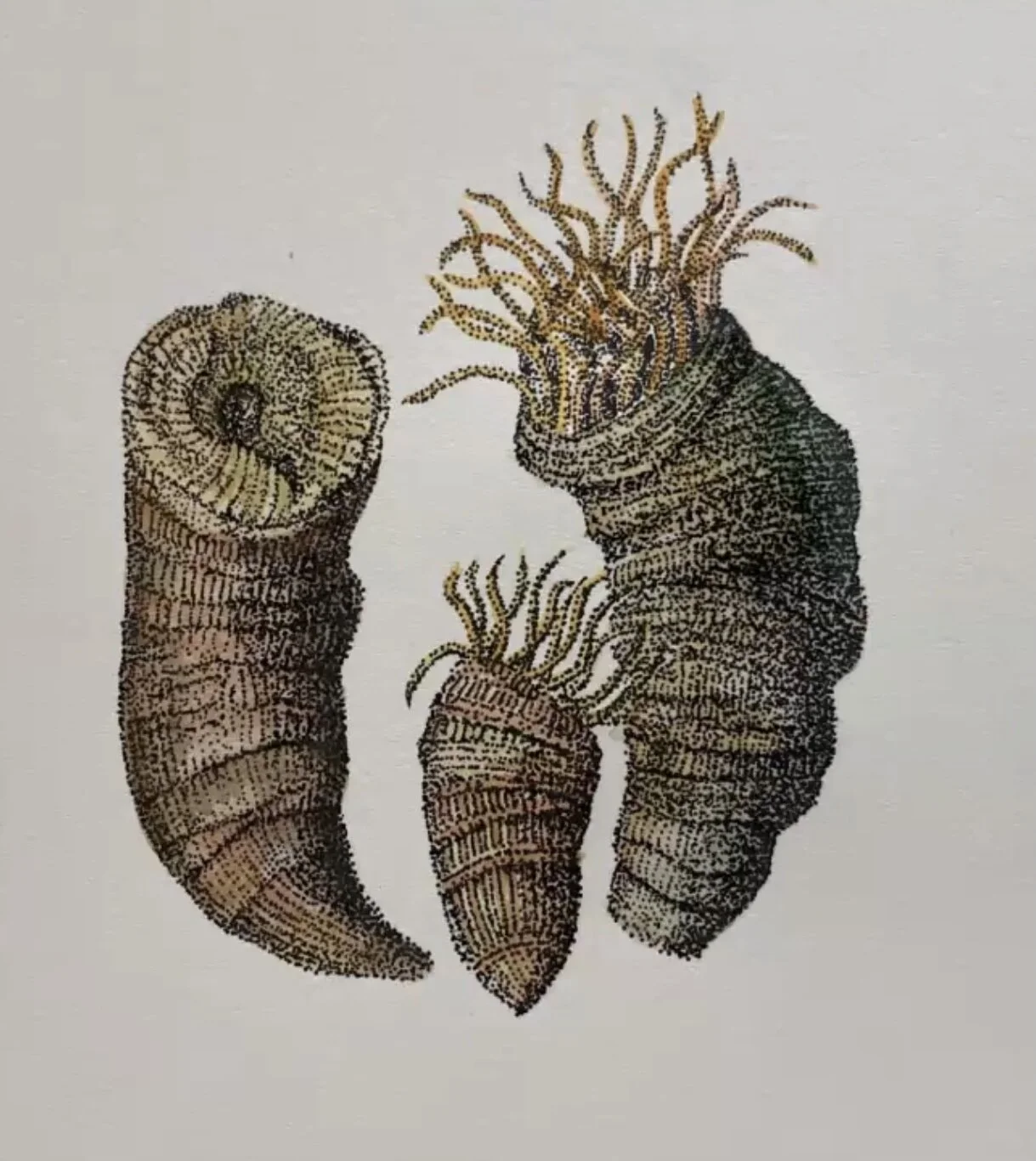
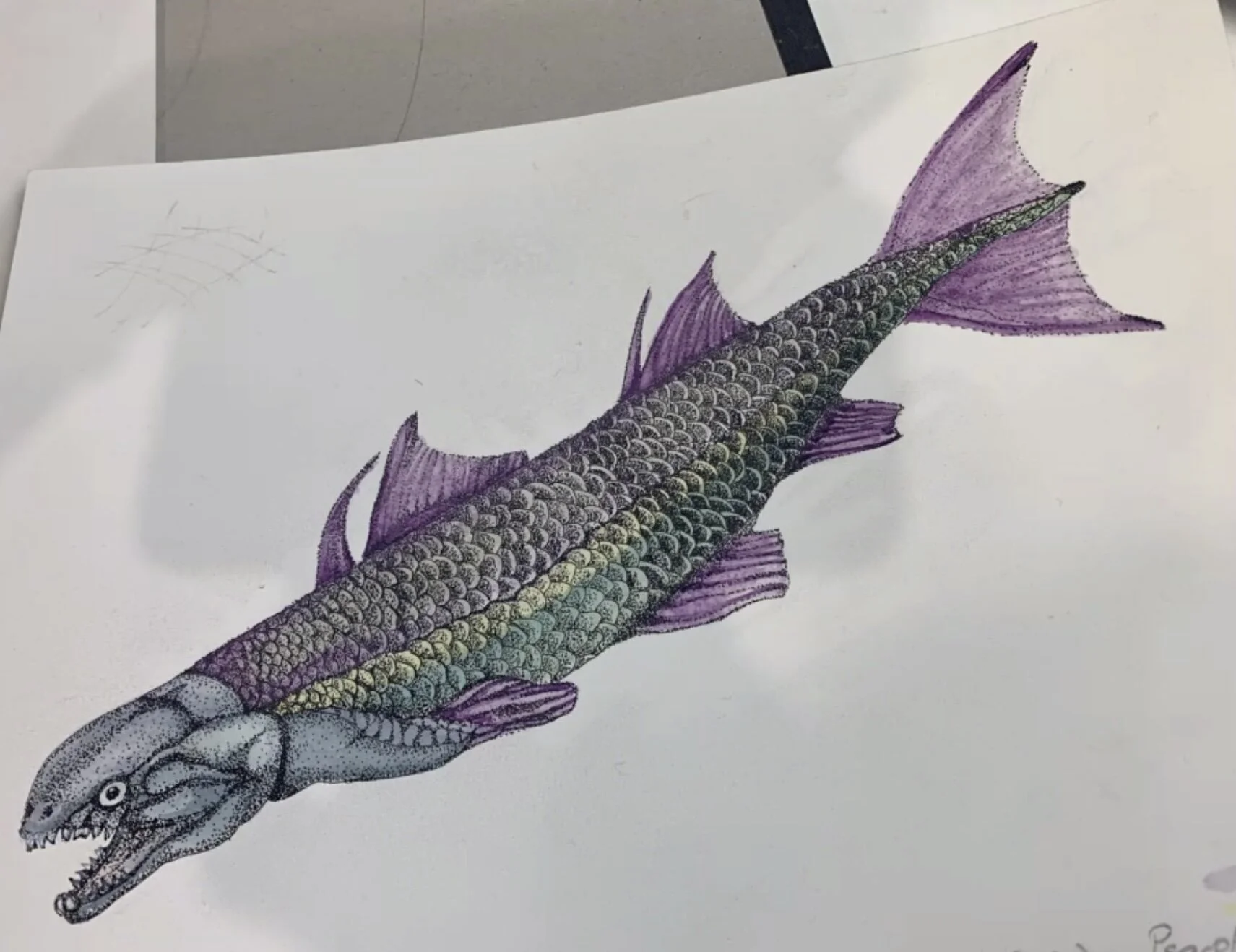
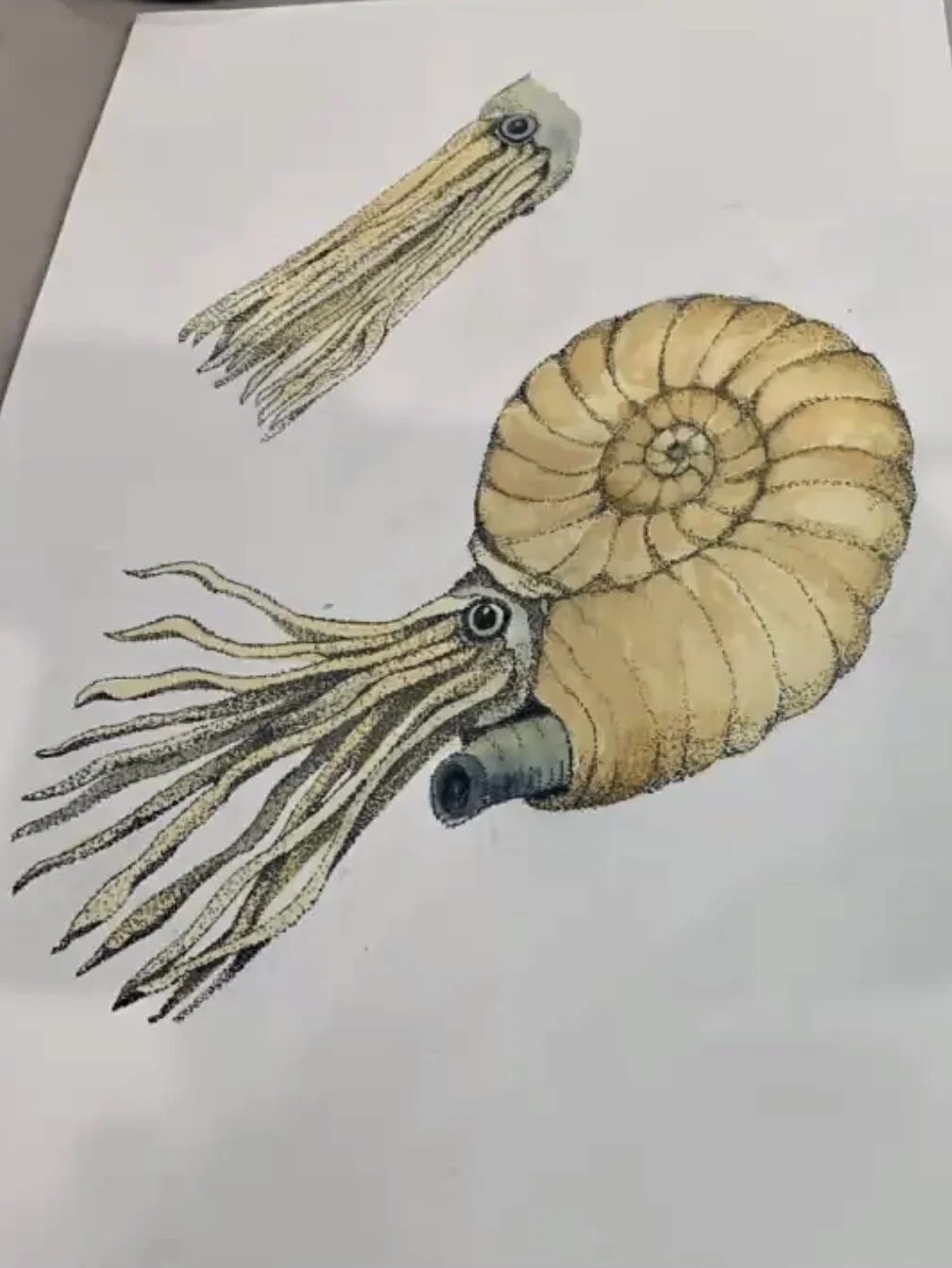
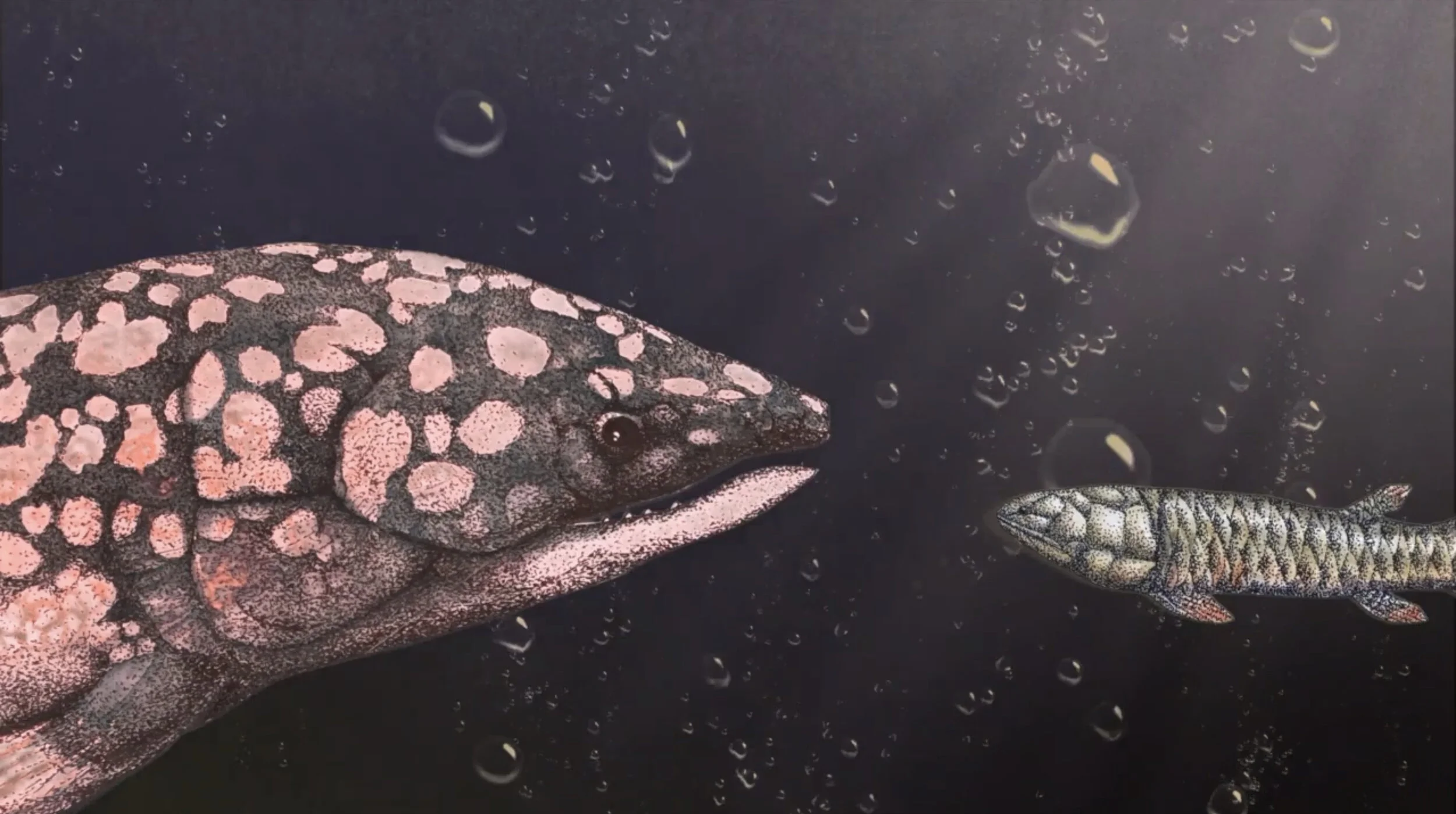
Devonian Billabong participant workshop examples - tutored by Angus Fisher and Todd Fuller
TESTIMONIAL - National Science Week 2021
“I wanted to thank all those involved in bringing “Create a Devonian Billabong” to life. We were very privileged to have Angus Fisher and Todd Fuller as our teachers, inspiring us to draw, colour and animate our creatures and to work collaboratively to create an ancient billabong teaming with fish and coral. It filled my imagination with possibilities, taught me about a time I knew little about and gave us all companionship and inspiration during this difficult lockdown. I am very grateful! Thank you!” - What a fantastic project!!!!”
“Its been a totally consuming and invigorating project in which to participate. Very well organised, excellent communication skills of both teachers, generous sharing of knowledge and a very enthusiastic cohort of fellow participants. I look forward to the final cut. Lots of work to do!!! so if there is anything I can do to assist, please let me know ”
“Ammonites are beautiful and did not survive the increased CO2 in the waters as they lived nearer the surface than their Nautilid cousins and as such, I understand were also devastatingly impacted by meteor collisions. I chose a Placoderm because they are such interesting looking creatures, Psarolepis is also very primitive, possibly related to the Gogo fish. It was thought to be a lobe finned fish (Sarcopterygii) originally, but apparently is now considered a basal ancestor of bony fish (Actinopterygii). One can only speculate about colourings and in such a large population I assume that colouration would have played a part in attracting reproductive partners and signalling danger. It was interesting to look up the geologic periods as at university I studied Biochemistry, Physiology and Zoology and never did Geology. I think I missed out! Thank you for the opportunity to participate and the excellent tutors you chose for the project. I would like to participate further in future ventures and hope one day to visit the Museum of Fishes and surrounds”
“Firstly, thanks for such a wonderful experience. As an artist, I don’t work in either of the styles/practices that Todd & Angus brought to the workshops so I was out of my comfort zone art wise. I was not out of my comfort zone workshop wise as they are top notch tutors and presenters and made me feel confident and capable with my work very quickly. As a teacher and art workshop presenter, I know the difficulties they would have had adapting to zoom style tutorials and they did it so well. Thanks for your input as well, backgrounding the project and the site and your organisation of the workshops, links etc. It looked seamless but that only happens with capable, hard work behind the scenes. I want to make special mention of the timing of the workshops. By having ample time away from the screens during the day, I felt relaxed about getting work done and was still able to do other little things around the house to break it up. The idea of ‘free time’ to work whilst the tutors were still available online was a real masterstroke. Such a unique experience and one that I’d happily be involved in again. I am looking forward to the launch of the work ”
Program -
August 14 -15, 10.00am - 4.00 pm
August 21 - 22, 10.00am - 4.00 pm
August 6 - Information session 6.00pm-6.30pm
Session 1 - Angus Fisher - ILLUSTRATION - Fundamentals
Session 2 - Todd Fuller - ANIMATION - Fundamentals
Session 3 - Angus Fisher - ILLUSTRATION - Building the billabong
Session 4 - Todd Fuller - ANIMATION - Building the billabong
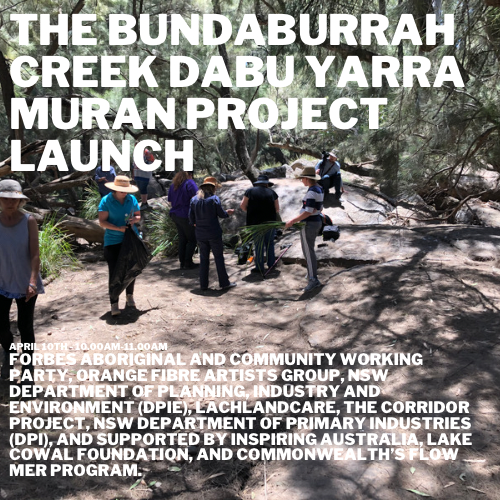
THE BUNDABURRAH CREEK DABU YARRA MURAN PROJECT
JOIN US FOR THE VIDEO LAUNCH AND DISCUSSION WITH PARTICIPANTS OF THIS PROJECT - REGISTER HERE APRIL 10TH - 10.00am-11.00am - 2021
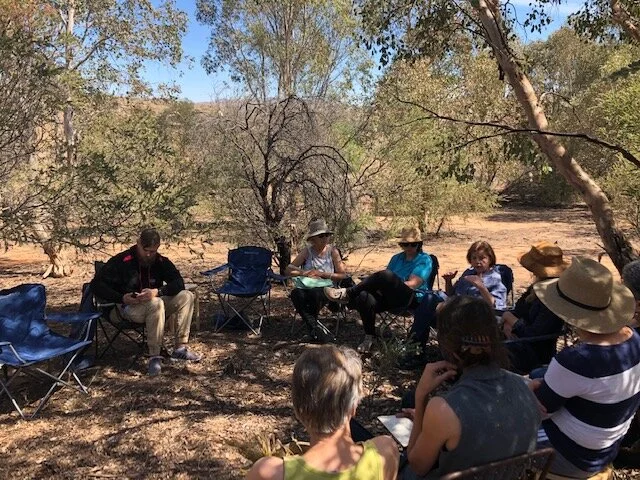
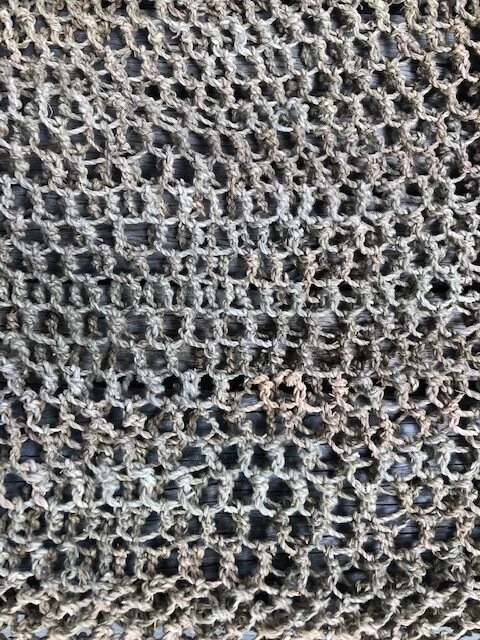
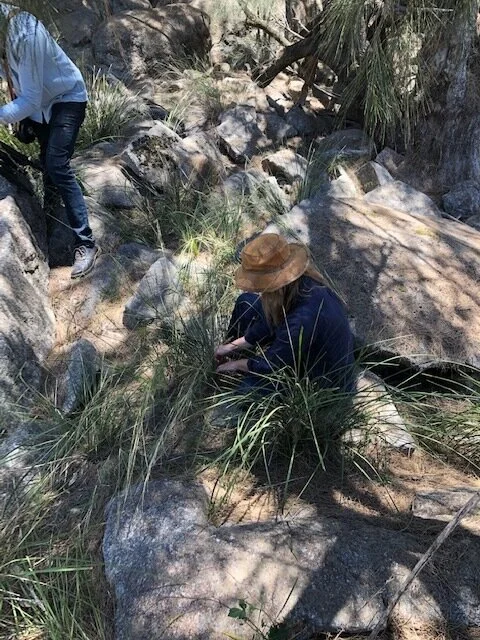
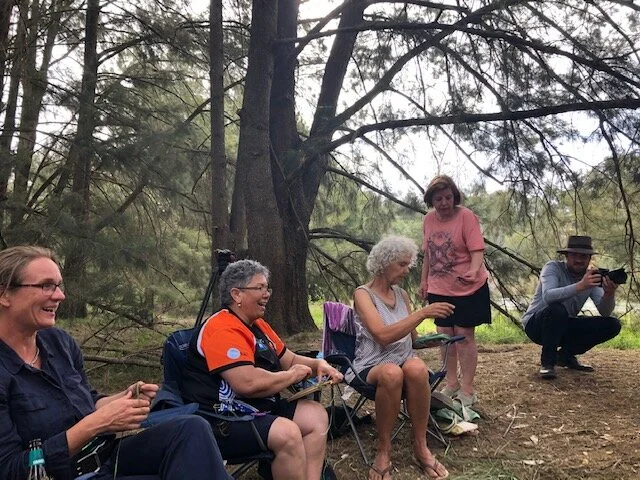
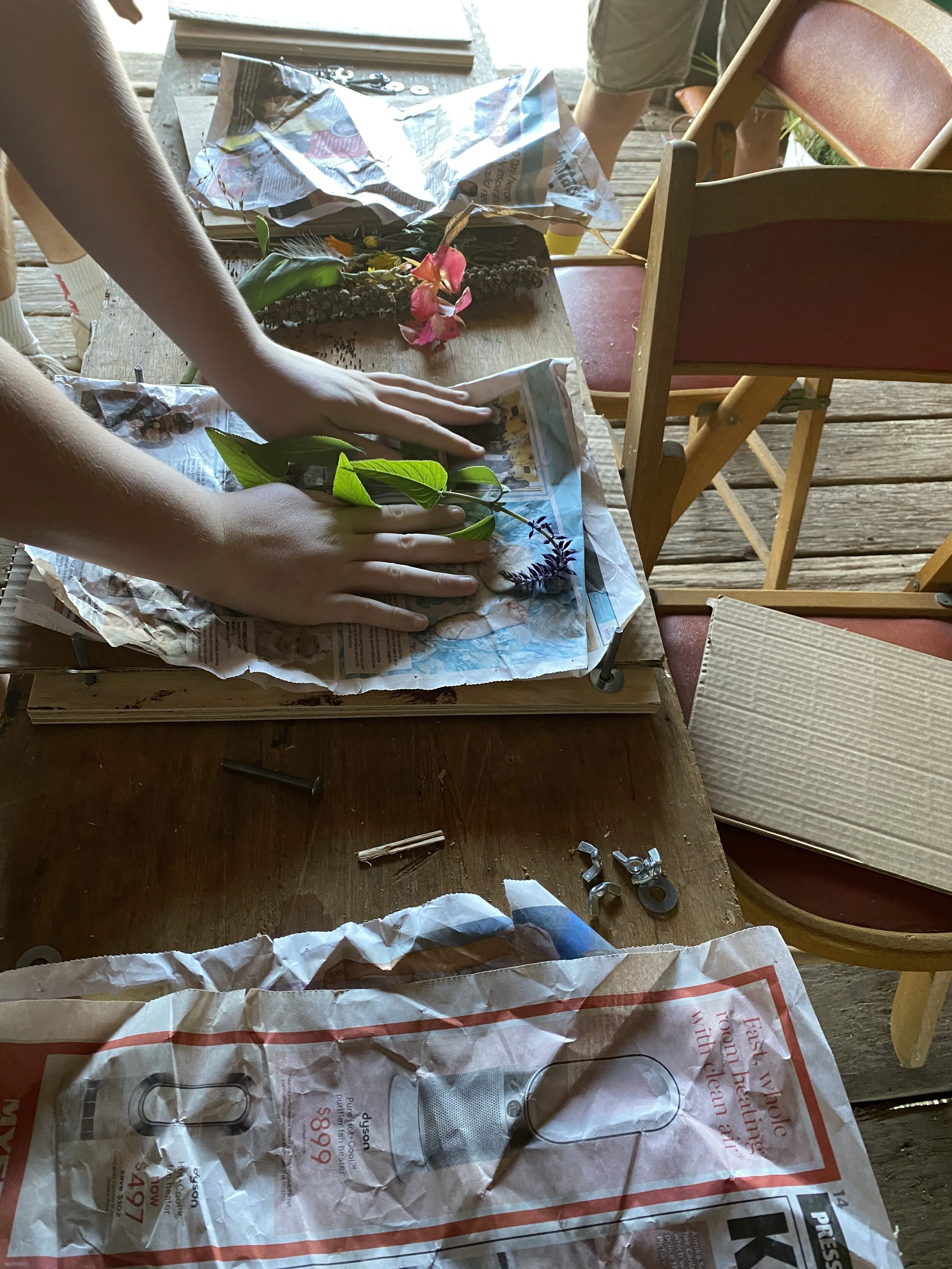
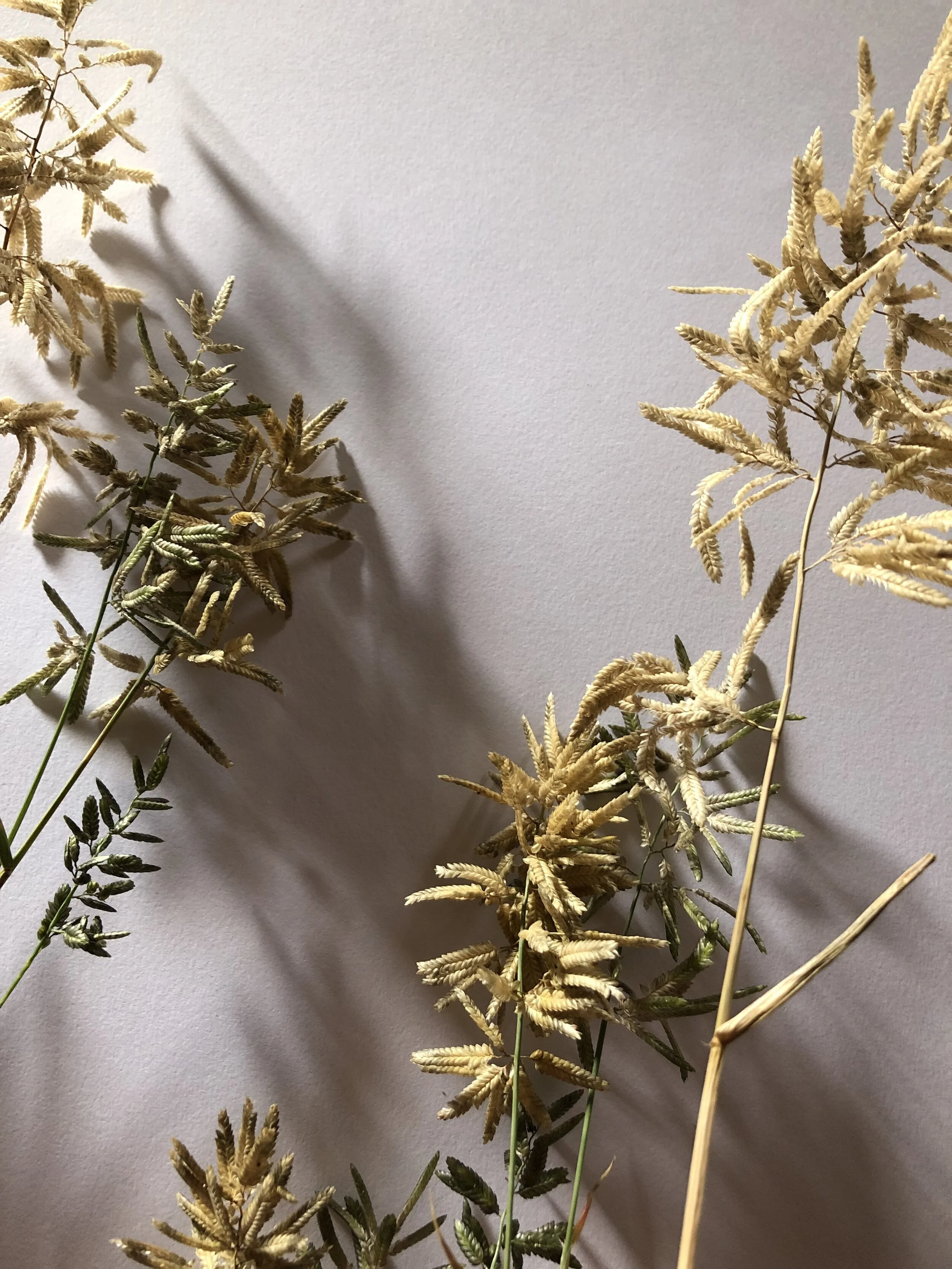
THE BUNDABURRAH CREEK DABU YARRA MURAN PROJECT VIDEO LAUNCH - Join us for an online presentation with Orange Fibre Artists Group, Helen Worsley and Claudette Elliot, Forbes Wiradjuri cultural/language advisor, David Acheson, and NSW environmental water manager (Lachlan), Dr. Joanne Lenehan, to preview a series of videos on collecting, weaving and twining natural fibres – and the importance of the yarning circle. The group will also discuss river habitat, language, and indigenous scientific knowledge, and adopting the traditions of harvesting and weaving of bark, plants, and grasses in a respective and sustainable way. The videos shown document cultural techniques and methodologies authored and owned by First Nation practitioners.
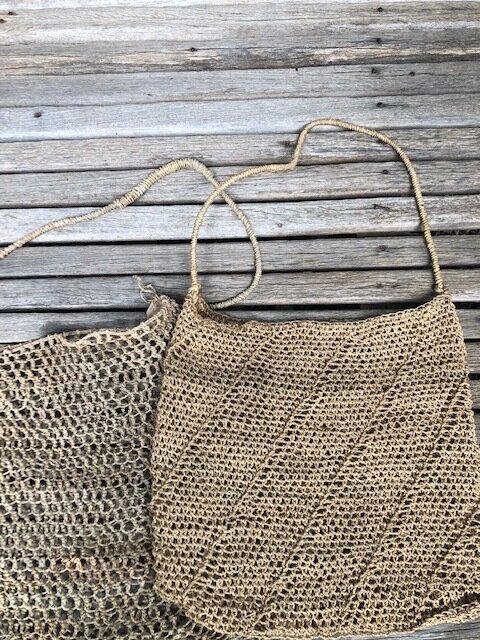
The Bundaburrah Creek Dabu Yarra Muran Project strategically links knowledge and care of specific native plants to provide materials for weaving workshops and cultural fishing practices (equipment such as fish/yabbie traps, string bags, and twin). In the spirit of too stop, see, listen, hear, understand - the videos celebrate a weekend on the Galari Bila (Lachlan River) that brought together women from Albury to Orange to share stories and teachings.
The weekend workshop and video presentation is a partnership between the Forbes Aboriginal and Community Working Party, Orange Fibre Artists Group, NSW Department of Planning, Industry, and Environment (DPIE), LachLandcare, the CORRIDOR project, NSW Department of Primary Industries (DPI), and supported by Inspiring Australia, Lake Cowal Foundation, and Commonwealth’s Flow MER Program.
The Project was a recipient of the NSW Government’s inaugural Aboriginal Fishing Trust Grant and the women’s weekend was hosted by the CORRIDOR project over 13–15 December 2019 - NEWS ARTICLE
We would like to acknowledge Harry Wedge and George Coe for their contribution to the video Welcome to Country, and David Acheson as a language consultant and introducing the videos in Wiradjuri language. Thanks to John Daly for the editing and filming of videos produced by the CORRIDOR project.
Videos, produced as part of this project, view HERE. If you would like to be part of our online session discussing these videos and the broader project register HERE. Further enquiries about this project HERE and we will connect you with the workshop organisers.
WARNING: Aboriginal and Torres Strait Islander viewers are warned that the following videos and images may contain images and voices of deceased persons.